
8 OCTOBER | 7 PM
Contemporary Art Platform Smala
BODY AND MEMORY
Experimental vocal music ensemble Edgy Palates
Chordos String Quartet
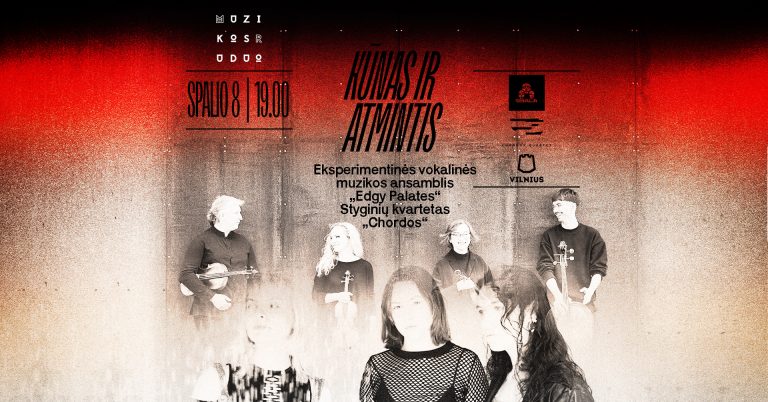
At the centre of the new programme by vocal trio Edgy Palates and Chordos String Quartet is a non-verbal language of sound. Timbre, breath, articulation, and microtonality become expressions of knowledge held within the body.
This experience is created through extended vocal and string techniques and deliberately unpolished sound. Such a sonic approach invites listeners to move away from conventional aesthetic listening and focus instead on bodily sensation – on what is felt rather than described.
In the works featured in the programme, sound unfolds not only as an artistic object but also as a somatic experience: the listener’s body itself becomes a resonating space in which different emotional states, sensations, and reactions emerge.
One of the programme’s key creative methods is improvisation. It functions not only as a way of shaping musical material, but also as a means of exploring spontaneous knowledge, often rooted in emotion and intuition, as well as the constantly shifting relationship between control and chance.
Through improvisation, the connection between the performers comes to the fore, grounded in attentive listening and direct responses to sound. Embodied memory also emerges through this interaction – rhythmic, articulatory, and intonational patterns in which individual experiences, sonic traces of different cultures, and the spontaneous functioning of a shared musical organism come together.
Performed by
EDGY PALATES
“Edgy Palates” is an experimental vocal music trio consisting of composers Dainora Aleksaitė, Ieva Parnarauskaitė, and Jūra Elena Šedytė, who create original compositions, free improvisation programs, and performative shows. In their work, extended vocal techniques serve as a means of exploring the human voice as a multifaceted instrument. By boldly experimenting with sound, form, and performance styles, the performers push the boundaries of vocal expression and challenge tradition.
CHORDOS
Founded in 1997, Chordos String Quartet is one of the most prominent and longest-running contemporary music ensembles in Lithuania. Since its earliest concerts, the quartet has consistently pursued its core artistic mission – to promote music by Lithuanian composers both in Lithuania and internationally, initiate new works, and introduce Lithuanian audiences to significant works by international composers of the 20th and 21st centuries.
Having attracted the attention of audiences and music professionals from its earliest years, Chordos soon became an integral part of Lithuania’s contemporary music scene. The quartet regularly appears at the country’s leading festivals, presents its own concert programmes, and performs Lithuanian music abroad. Over almost three decades, the ensemble has given more than 400 concerts, including over 50 performances outside Lithuania.
The quartet is actively involved in creative collaborations with artists, soloists, and ensembles from a wide range of disciplines. Its artistic partners have included cellists David Geringas and Anton Lukoszevieze, trombonist Mike Svoboda, pianist Indrė Baikštytė, saxophonist Liudas Mockūnas, soprano Asmik Grigorian, the UK-based ensemble Apartment House, the Jauna Muzika choir, Copenhagen Dance Theatre, interdisciplinary artist Denisas Kolomyckis, and many others.
In 2001, director Edmundas Zubavičius made the documentary film “Fuga plenere” about the quartet. In 2024, the members of Chordos received the Lithuanian Government Award for Culture and Arts for their significant contribution to Lithuanian culture and art.
Recordings of Lithuanian music form an important part of Chordos’ work. The quartet has released more than ten albums featuring works by Lithuanian composers, including Osvaldas Balakauskas, Onutė Narbutaitė, Bronius Kutavičius, Mindaugas Urbaitis, and others. In 2027, Chordos will celebrate 30 years of concert activity.